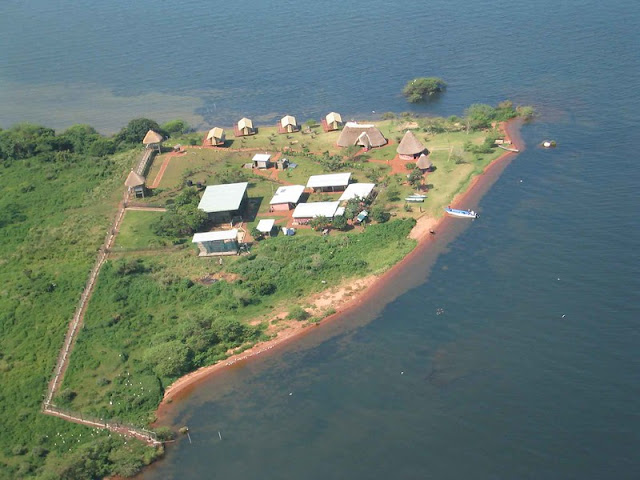
Ngamba Island Chimpanzee Sanctuary Ngamba Island Chimpanzee Sanctuary was established in October 1998 to care for orphaned chimpanzees that have been rescued by the Uganda Wildlife Authority (UWA). Many of the chimpanzees were rescued from poachers and are victims of illegal poaching for bush meat and pet trade. It is for this reason that encroachment on their habitat that they are at a blink of extinction if nothing is done in the next 5-10 years. These chimps and others are taken from the wild and endure incredible hardship and terror before reaching Ngamba Island Chimpanzee Sanctuary. Surrounded by the peaceful waters of Lake Victoria, Ngamba Island Chimpanzee Sanctuary is home to 49 orphaned chimps rescued from throughout Uganda. Chimpanzee Sanctuary and Wildlife Conservation Trust (CSWCT) – an NGO, is responsible for all aspects of the sanctuary at Ngamba Island. Deeply committed to and involved in the conservation education of loc...
Popular posts from this blog
Ngamba Island Sanctuary The sanctuary is located approximately 180 kilometres (110 mi), by road, north of Kampala , Uganda’s capital and largest city. Ziwa Rhino Sanctuary is a collaborative effort between the Uganda , the Rhino Fund Uganda which was formed as a non-government organization (NGO) in 1997 to repopulate Uganda with wild rhinos in the future. The sanctuary offers a secure place where rhino populations can be expanded by breeding, protected from human and non-human predators and gradually re-introduced into Uganda’s national parks , while at the same time, allowing the public to enjoy these majestic animals. The sanctuary is home to least 40 mammals and reptilian species including monkeys, hippopotamuses, monkeys, crocodiles and different bird species The sanctuary also works on animal rehabilitation where other mammals like reptiles or birds were injured or abandoned but are rehabilitated and released back into the w...
Located on the edge of the Equator, Uganda is positioned in south-central Africa, and bordered by the Democratic Republic of the Congo (DRC), Kenya, Rwanda, Sudan and Tanzania. Uganda averages about 1,100 metres (3,609 ft) above sea level, and while much of its border is lakeshore, Uganda is landlocked with no access to the sea. The country is mostly plateau with some rolling hills and low mountains. Grassland and tropical forest dominate the central region, with volcanic foothills in the east. The Ruwenzori Mountains form much of the southwestern border between Uganda and the DRC. The highest peaks there are snow capped. In eastern Uganda, the border with Kenya is marked by volcanic hills. Uganda is replete with water and contains many large lakes. In fact, almost one-fifth of its total area is open water or swampland. Four of East Africa's Great Lakes - Lake Victoria, Lake Kyoga, Lake Albert, and Lake Edward lie within Uganda or on its borders. Lake Victoria is the second larg...
Comments
Post a Comment